
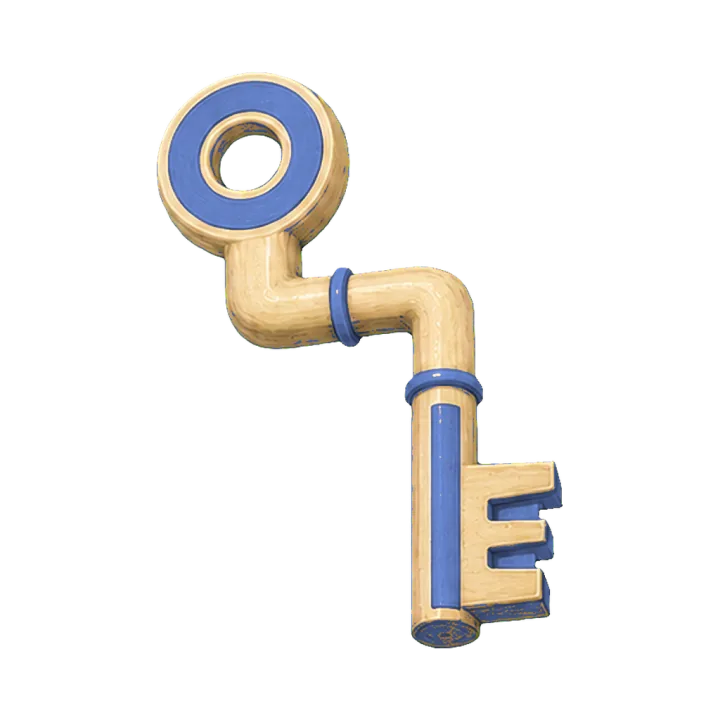
The locksmith's return
The locksmith had cut the key from the same brass used for the house's first locks. Its teeth were correct. Its weight was familiar. Every time the owner returned, however, the door had shifted a little farther along the wall.
For years the owner held the key upright against the place where the lock had been. The key acquired scratches. The wall acquired a bright worn patch. One evening, tired of proving that the old position had once been real, the owner followed the seam in the wood. The lock was lower and slightly to the left. Held sideways, the old key turned.
The key kept its shape. The lock did not keep its place.
What one reader might notice
A person considering a new role might notice that the key remained old. Their association could be: I do not need to become a different person to work differently. The useful distinction is between preserving a value and preserving the setting in which that value first worked.
Another reader in a strained relationship might notice the moved lock. Their association could be: I keep making the same request because it was once answered here. The story may open a question about whether the relationship's conditions have changed, not whether the request was unreasonable.
A third reader could disagree
Someone else may resist the different angle. They may have spent years adapting to a system that keeps moving its requirements. For them, the detail could reveal the exhaustion of solving every problem through personal flexibility.
That association leads somewhere else: perhaps the question is not how to turn the key, but how often a person should be asked to search for the lock. The symbol has not changed meaning. The reader has supplied different evidence from a different life.
The Sideways Key does not mean adaptability, leaving, staying, or trying harder. Its story contains bounded details. Arcalis uses only the detail a writer selects and the connection they explain.
Questions the story can hold
These questions do not converge on one answer. Their purpose is to interrupt a rehearsed explanation and make room for a sentence the reader has not used before.
- What are you trying to preserve: the need, the method, or the old setting?
- What evidence suggests the conditions have actually moved?
- Would a different angle be adaptation or another unpaid burden?
- What part of the old shape still deserves to remain?
Questions people ask
What does the Sideways Key symbolize?
It has no fixed symbolic meaning. One reader may connect it with adaptation, another with changed conditions, and another with the cost of always being the one who adjusts.
Does revealing this symbol mean I should change direction?
No. Arcalis symbols do not predict or instruct. Only the detail you notice and the association you write become part of your reflection.