
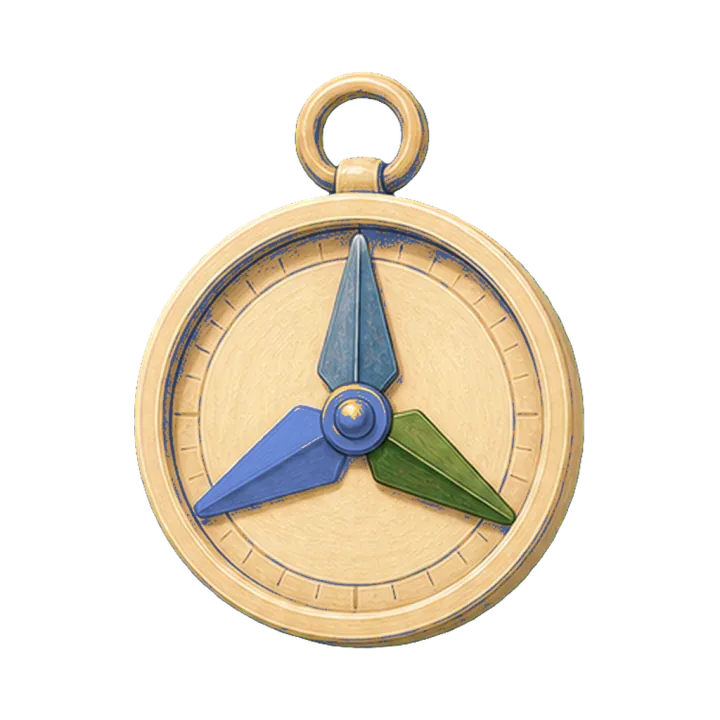
Use one card when attention is the work
A single image is useful when the question is already clear and you want one perspective to respond to. It limits the temptation to keep drawing until the reading becomes reassuring.
Ask which detail catches you and why. Stay with the association long enough to see whether it changes the question. If it does not, more cards may add decoration rather than clarity.
Use three cards when each position has a job
Three cards help when the question contains three genuinely different parts. Useful positions include known / assumed / unknown, protects / costs / asks, or present condition / missing fact / update rule.
Avoid vague sequences where every card can answer every question. The positions should reduce ambiguity, not multiply it.
Facts, direct statements, and conditions you can verify.
Forecasts, interpretations, and beliefs that may be reasonable but remain unverified.
Information unavailable now and outcomes no spread can guarantee.
Do not redraw because the first answer hurts
A second spread can be appropriate when the question changes. It is less useful when the first reading exposed a cost and the next draw is being asked to remove it.
Before drawing again, write what new question has appeared. If the wording is the same, keep the original image and examine the resistance instead.
Why Arcalis uses one symbol
Arcalis assigns one original story object to a letter and never rerolls it. The constraint is intentional: the object is not an answer pool. It is one unfamiliar prompt that gives the writer a chance to notice and explain a detail.
The structured reply can then trace how that user-authored association affected the framing and tradeoffs. More symbols would make the evidence chain harder to inspect and easier to treat as fortune-telling.
Questions people ask
When should I use one tarot card?
Use one card when the question needs one bounded perspective and additional cards would mainly create more interpretations.
When should I use a three-card tarot spread?
Use three cards when every position has a distinct job, such as known, assumed, and unknown.
Are more cards more accurate?
No. More cards add material, not certainty. Facts and context still matter more than the number of images.